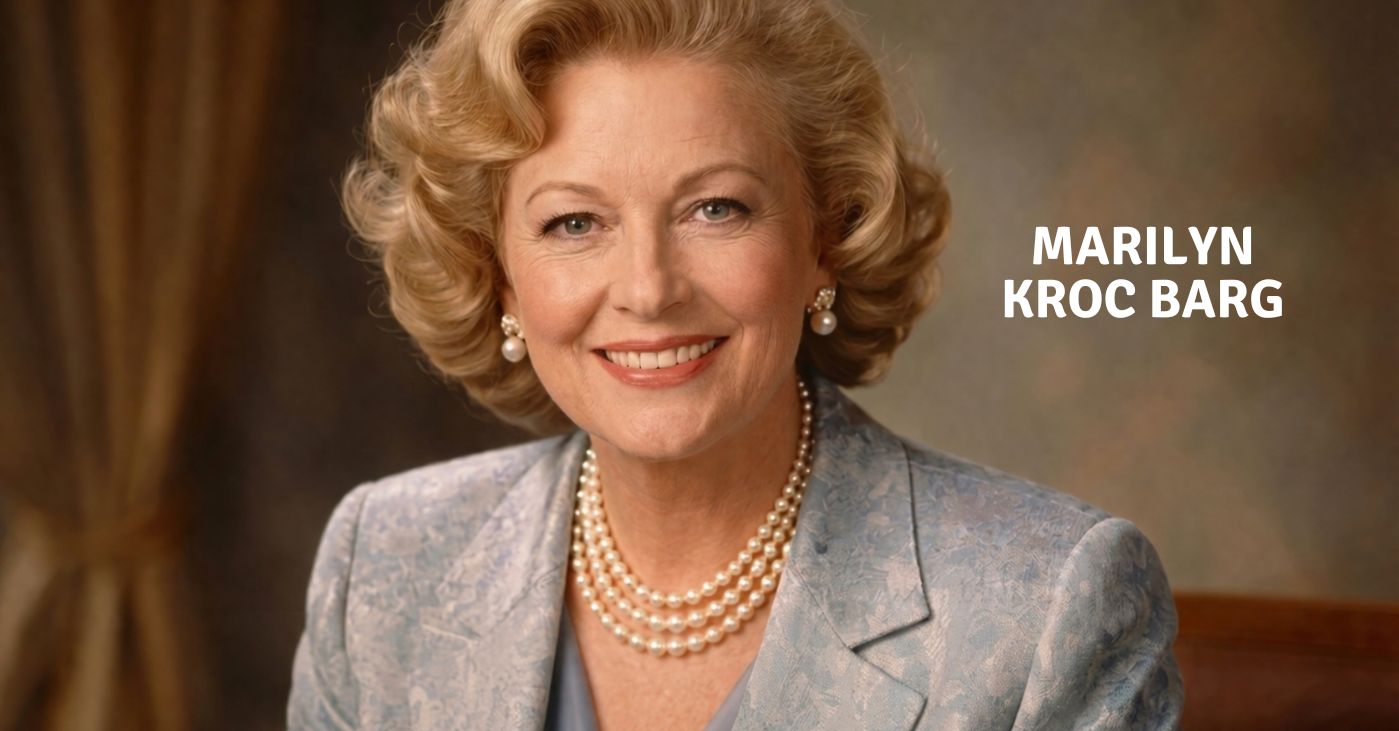
Thetory ofMcDonald’s is often told through the lens of relentless ambition, golden arches, and the legendary Ray Kroc. However, behind the global phenomenon and the high-stakes boardroom battles depicted in history books and films like The Founder, there was a private side to the Kroc family. At the heart of this personal narrative was Marilyn Kroc Barg, Ray Kroc’s only child.
While her father was busy revolutionizing the fast-food industry and becoming a household name, Marilyn lived a life that was significantly more reserved. This is the untold story of a woman who navigated the complexities of being the heir to one of the world’s greatest fortunes while maintaining her own distinct identity.
Introduction: Who Was Marilyn Kroc Barg?
Marilyn Kroc Barg was more than just the daughter of a billionaire tycoon. Born into a modest household before the “Big Mac” was even a concept, she witnessed her father’s transformation from a struggling multi-mixer salesman to the king of franchising. Despite the immense wealth and public scrutiny that came with the Kroc name, Marilyn remained an enigmatic figure. She did not seek the limelight, nor did she attempt to become a public face of the McDonald’s Corporation. Instead, she carved out a life defined by her personal passions, her love for animals, and a quiet dedication to her family.
Early Life and Family Background
Marilyn was born in October 1924 to Ray Kroc and his first wife, Ethel Fleming. At the time of her birth, the family lived in Illinois, and Ray was far from the wealthy man he would eventually become. During the 1920s and 30s, Ray Kroc hopped from job to job—playing piano, selling paper cups, and eventually marketing milkshakes.
Growing up, Marilyn saw the “grind” firsthand. Her mother, Ethel, was often skeptical of Ray’s “get-rich-quick” schemes, which created a grounded, if sometimes tense, domestic environment. Unlike the “nepo babies” of the modern era, Marilyn’s early years were rooted in middle-class Midwestern values. She was raised during the Great Depression, an experience that likely influenced her preference for privacy and stability over the flashiness of corporate fame.
Living in the Shadow of the Golden Arches
By the mid-1950s, when Ray Kroc struck his deal with the McDonald brothers, Marilyn was already an adult. As the “Golden Arches” began to pop up across America, the Kroc family’s social standing shifted overnight. However, for Marilyn, the sudden influx of wealth was a double-edged sword.
While her father was obsessed with growth—often working eighteen-hour days—Marilyn chose a different path. She lived through the era where her father’s name became synonymous with American capitalism. Being the daughter of such a polarizing and powerful figure meant that her every move could be scrutinized. To counter this, Marilyn largely avoided the corporate social circuits of Chicago and California, choosing instead to focus on a life that felt authentic to her.
Personal Life: Marriage and Interests
Marilyn’s personal life was a stark contrast to the fast-paced world of fast food. She eventually married Walter James Barg. Their relationship was characterized by a shared desire for a life away from the cameras.
One of the most defining aspects of Marilyn’s life was her passion for the equestrian world. She was an avid horse enthusiast. While her father was obsessed with the “horsepower” of his business empire, Marilyn found solace in actual horses. She was deeply involved in breeding and showing horses, particularly American Saddlebreds. In the equestrian community, she wasn’t just “Ray Kroc’s daughter”; she was a respected figure who understood the discipline and beauty of the sport. This hobby provided her with an identity that was entirely her own, separate from the burgers and fries that funded her lifestyle.
Her Rolpy and Humanitarian Work
The Kroc name is synonymous with massive philanthropy—most notably the Ronald McDonald House Charities and the billion-dollar legacy left by Ray’s third wife, Joan Kroc. However, Marilyn contributed to the family’s altruistic reputation in her own quiet way.
She was known to support various local charities, particularly those focused on animal welfare and medical research. Because she avoided the press, much of her giving was done anonymously or through private foundations. She believed in the philosophy that true charity does not require a press release—a trait that stood in contrast to her father’s flair for the dramatic.
Health Struggles and Final Years
The latter part of Marilyn’s life was unfortunately marked by health challenges. She battled Type 1 diabetes for a significant portion of her life. During an era when diabetes management was not as advanced as it is today, the disease took a heavy toll on her system.
Despite her health struggles, she remained active in her interests for as long as possible. She witnessed her father’s passing in 1984, which marked the end of an era for the Kroc family. Marilyn herself passed away just a few years later, in 1973, at the relatively young age of 48. Her passing was a private affair, much like her life, leaving behind a legacy of quiet dignity.
The Legacy of Marilyn Kroc Barg
So, how should we remember Marilyn Kroc Barg? In the grand narrative of American business, she serves as a reminder that the children of “great men” are often complex individuals who do not always wish to follow in their parents’ footsteps.
Marilyn’s legacy is one of balance. She enjoyed the fruits of her father’s labor but refused to let his ambition consume her own personality. In the equestrian world, she is remembered for her contribution to the sport. In the Kroc family history, she is remembered as the daughter who stayed grounded even as her family’s wealth reached the stratosphere.
Conclusion: A Quiet Life Amidst Loud Success
Marilyn Kroc Barg lived at the intersection of ordinary and extraordinary. She was born to a salesman and died the heiress to a global empire, yet she never lost her sense of self. While the world remembers Ray Kroc for his ruthlessness and business genius, those who look closer will find the story of Marilyn—a woman who chose horses over boardrooms and privacy over fame.
Her life teaches us that success isn’t always measured by how many franchises you own or how much your name is in the paper. Sometimes, the greatest success is simply living a life that is true to yourself, even when you are the daughter of the man who fed the world.e in the Kroc Legacy
A common question asked by historians is: Did Marilyn Kroc Barg run McDonald’s? The answer is a definitive no. Unlike other dynasty families (like the Waltons or the Fords), Marilyn did not take a leadership role in her father’s company.
Ray Kroc was famously singular in his management style. He lived and breathed McDonald’s, and while he cared for his daughter, he did not view the company as a “family business” in the traditional sense where heirs were groomed for the CEO chair. Marilyn seemed perfectly content with this arrangement. She held investments and benefitted from the family’s financial success, but she left the pickles, patties, and politics to her father and his hand-picked executives like Fred Turner.
Philanthro and Humanitarian Wok
The Kroc name is synonymous with massive philanthropy—most notably the Ronald McDonald House Charities and the billion-dollar legacy left by Ray’s third wife, Joan Kroc. However, Marilyn contributed to the family’s altruistic reputation in her own quiet way.
She was known to support various local charities, particularly those focused on animal welfare and medical research. Because she avoided the press, much of her giving was done anonymously or through private foundations. She believed in the philosophy that true charity does not require a press release—a trait that stood in contrast to her father’s flair for the dramatic.
Health Struggles and Final Years
The latter part of Marilyn’s life was unfortunately marked by health challenges. She battled Type 1 diabetes for a significant portion of her life. During an era when diabetes management was not as advanced as it is today, the disease took a heavy toll on her system.
Despite her health struggles, she remained active in her interests for as long as possible. She witnessed her father’s passing in 1984, which marked the end of an era for the Kroc family. Marilyn herself passed away just a few years later, in 1973, at the relatively young age of 48. Her passing was a private affair, much like her life, leaving behind a legacy of quiet dignity.
The Legacy of Marilyn Kroc Barg
So, how should we remember Marilyn Kroc Barg? In the grand narrative of American business, she serves as a reminder that the children of “great men” are often complex individuals who do not always wish to follow in their parents’ footsteps.
Marilyn’s legacy is one of balance. She enjoyed the fruits of her father’s labor but refused to let his ambition consume her own personality. In the equestrian world, she is remembered for her contribution to the sport. In the Kroc family history, she is remembered as the daughter who stayed grounded even as her family’s wealth reached the stratosphere.
Conclusion: A Quiet Life Amidst Loud Success
Marilyn Kroc Barg lived at the intersection of ordinary and extraordinary. She was born to a salesman and died the heiress to a global empire, yet she never lost her sense of self. While the world remembers Ray Kroc for his ruthlessness and business genius, those who look closer will find the story of Marilyn—a woman who chose horses over boardrooms and privacy over fame.
Her life teaches us that success isn’t always measured by how many franchises you own or how much your name is in the paper. Sometimes, the greatest success is simply living a life that is true to yourself, even when you are the daughter of the man who fed the world.
FAQs
What was Marilyn Kroc Barg’s role in the McDonald’s corporation?
Marilyn never held an official executive position or active management role within the McDonald’s business.
Who were the biological parents of Marilyn Kroc Barg?
She was the only child of McDonald’s legendary founder Ray Kroc and his first wife, Ethel Fleming.
What was Marilyn Kroc Barg’s primary personal passion?
Marilyn was a deeply dedicated equestrian who spent much of her life breeding and showing American Saddlebred horses.
Did Marilyn Kroc Barg ever write an autobiography?
No, Marilyn chose to live a very private life and never published any books or memoirs about her family.
What was the cause of Marilyn Kroc Barg’s passing?
Marilyn passed away in 1973 due to health complications related to Type 1 diabetes.
To whom was Marilyn Kroc Barg married?
She was married to Walter James Barg, and together they maintained a lifestyle away from the public eye.
How is Marilyn Kroc Barg remembered today?
She is remembered as a woman of quiet dignity who prioritized her personal passions over corporate fame and fortune.