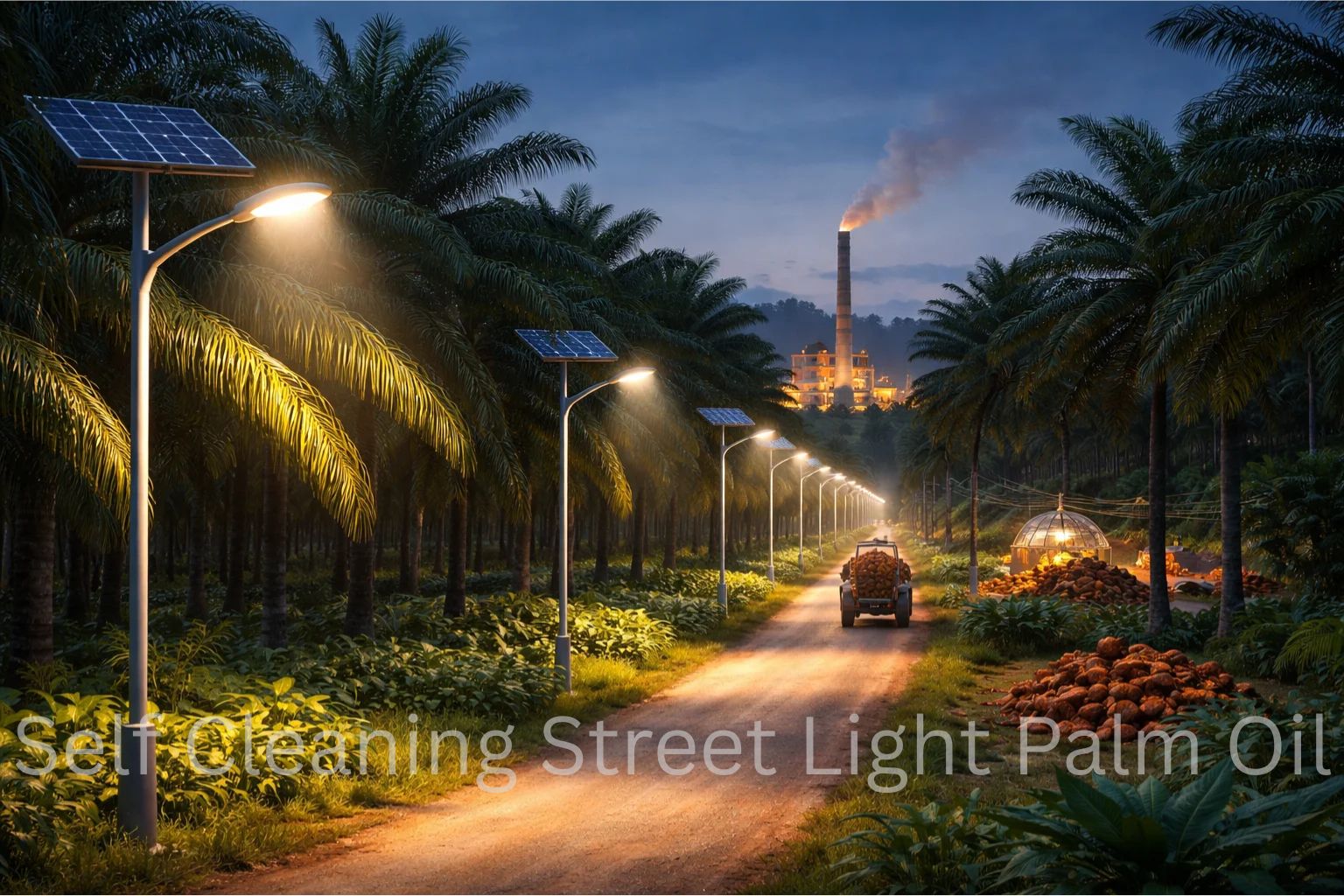
Modern cities rapidly grow, and with this growth comes the demand for smarter and more efficient infrastructure. One of the essential parts of any urban system is street lighting. However, traditional street lights face a common issue—dust, pollution, and dirt buildup that reduces their brightness over time. This not only affects visibility but also increases maintenance costs for local authorities.
To solve this issue, engineers have developed an advanced concept known as self-cleaning street lights. These systems are designed to automatically clean their surface without manual effort. When combined with eco-friendly materials like palm oil-based solutions, this innovation becomes even more sustainable and environmentally responsible.
What is a Self Cleaning Street Light?
A self-cleaning street light is an advanced lighting system that can automatically remove dust and debris from its surface. Unlike traditional lights that require manual cleaning, these smart lights use built-in mechanisms such as micro-cleaning brushes, spray systems, or vibration technology.
Some modern versions also use sensor-based automation. These sensors detect when the light surface becomes dirty and activate the cleaning system instantly. This ensures that the light remains clear and bright at all times, improving road safety and reducing maintenance efforts.
Role of Palm Oil in This Innovative System
Palm oil plays a surprising but important role in this technology. Instead of using chemical-based cleaning liquids, engineers are exploring palm oil derivatives as a natural and biodegradable alternative.
Palm oil-based solutions can act as:
- A gentle cleaning fluid for removing dust particles
- A lubricant for mechanical cleaning parts
- A sustainable replacement for harmful chemical agents
Because palm oil is plant-based, it is biodegradable and does not harm the environment when used responsibly. This makes the entire system more eco-friendly and aligned with green energy goals.
How the Self Cleaning Mechanism Works
The working process of a self-cleaning street light is quite simple but highly effective:
First, the system uses sensors to monitor the surface condition of the light. When dust or dirt reaches a certain level, the cleaning mechanism automatically activates. Depending on the design, small brushes or spray nozzles clean the surface gently.
In palm oil-based systems, a fine layer of biodegradable solution is used to loosen dust particles. Once the cleaning is done, the system dries the surface quickly to ensure clear visibility. After completing the cycle, the system returns to standby mode until the next cleaning is required.
Benefits of Using Palm Oil-Based Self Cleaning Street Lights
1. Better Environmental Protection
Using natural palm oil-based cleaning solutions reduces harmful chemical waste, making the system environmentally safe.
2. Reduced Maintenance Costs
Cities do not need to send cleaning teams frequently, which saves labor and transportation costs.
3. Improved Lighting Performance
Clean surfaces ensure maximum brightness, improving safety for drivers and pedestrians.
4. Longer Equipment Life
Regular automatic cleaning prevents long-term damage caused by dust buildup.
5. Energy Efficiency
When lights remain clean, they perform better without consuming extra power.
Comparison with Traditional Street Lights
Traditional street lights require manual cleaning schedules, which can be expensive and time-consuming. In polluted or dusty environments, they become dirty quickly, reducing their effectiveness.
In contrast, self-cleaning street lights:
- Work automatically without human effort
- Stay cleaner for longer periods
- Require less maintenance
- Use eco-friendly materials like palm oil instead of chemicals
This makes them a more advanced and cost-effective solution for modern cities.
Environmental Impact and Sustainability
One of the biggest advantages of this technology is its positive environmental impact. By reducing the use of chemical cleaning agents, pollution levels decrease significantly. In addition, fewer maintenance vehicles on the road mean lower carbon emissions.
Palm oil-based solutions also support sustainability goals when sourced responsibly. Since they come from natural resources, they break down easily and do not harm soil or water systems.
Overall, this technology supports the idea of building green and smart cities.
Challenges and Limitations of the Technology
Even though this innovation is promising, it still faces some challenges:
- High installation cost compared to traditional lights
- Need for regular monitoring of cleaning mechanisms
- Dependency on proper maintenance of sensors
- Concerns about sustainable palm oil sourcing
These challenges need to be addressed for large-scale adoption.
Future Scope of Self Cleaning Street Light Technology
The future of self-cleaning street lights looks very promising. With the growth of smart cities and IoT systems, these lights can become fully automated and connected to central control systems.
Future improvements may include:
- Solar-powered self-cleaning lights
- AI-based dirt detection systems
- Fully biodegradable cleaning fluids
- Integration with smart traffic systems
As technology advances, these systems will become more affordable and widely used across urban and rural areas.
Conclusion
Self-cleaning street lights using palm oil represent a new step toward sustainable urban development. They combine smart automation with eco-friendly materials to create a system that is efficient, cost-effective, and environmentally responsible.
While there are still some challenges to overcome, the potential of this technology is huge. In the coming years, it can play a major role in building cleaner, greener, and smarter cities around the world.
FAQs
1. What is a self-cleaning street light?
It is a smart street light that automatically removes dust and dirt from its surface.
2. How does it clean itself?
It uses sensors, brushes, or spray systems to remove dirt automatically.
3. Why is palm oil used in this technology?
Palm oil is used as an eco-friendly, biodegradable cleaning and lubrication solution.
4. Is this technology environmentally friendly?
Yes, it reduces chemical use and supports sustainable urban development.
5. Does it reduce maintenance costs?
Yes, it lowers manual cleaning and maintenance expenses significantly.
6. Where can this technology be used?
It can be used in smart cities, highways, and polluted urban areas.
7. What is the main benefit of this system?
It keeps street lights clean automatically, improving brightness and efficiency.